Showing posts with label Edtech. Show all posts

Sunday, August 7, 2011

designed for learning

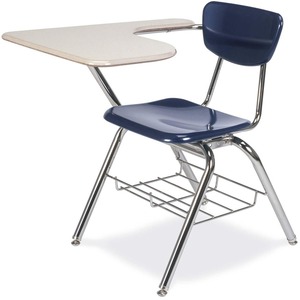
Would you want to sit in this for eight hours?
 At ISTE and #140edu I heard a lot about how schools create a clear divide between students' living and learning environments by not allowing students to use their organic technologies such as cell phones and sites like YouTube and Facebook.One of the most personalized thoughts I walked away with from #140edu is that the use, or absence, of technologies is only part of changing the state, or design, of education as a whole.

One of the speeches that catapulted the most reflections and cranial connections at #140edu was from designer creative Christian Long. Holding up a standard classroom plastic chair, Long pointed out that these were devices meant for the practical purpose of stacking and not to cater to the spinal comfort of its customer.

So, let's do some visualization. Think about your classroom (or one you have visited). Does it match much of the criteria that is outlined in this article from School Zone? Here are some ways to think about classroom space:

  • The desire is for students to collaborate,  but we separate them into rowed desks when personal space can be given in the form of cubbies or lockers. What socialization tools can be gained by learning how to share table space as an "our" space over a desk that is "my" space.  I started using tables two years ago and would never go back. 
  • What if your walls became white walls where students mapped out ideas during collaboration. Bulletin boards were used for function, such as drop boxes and student work galleries. Wordy, graphic heavy posters that inspire distraction rather than genuine inspiration are gone.
  • Less is more, it's time to purge my friend. Teacher desks have not been designed for real-life function post 1980; they are the shoulder pads of your classroom. Cut the chord, get creative. Use a smaller surface like a computer desk if needed (mine sits in the back of the room on wheels so it can be pushed against the wall) Get some magnet boards and spice containers for supplies like paper clips and use one shelf in your classroom closet for other every-day use items. When you need to work, spread out on student tables or relocate to the library. (Only if publishers shared this thought by making curriculum packages that had less than five pieces to store and manage.) 

 While in NYC for #140edu I visited the Google offices and was surrounded by space that was designed for thinking and collaboration. Walls in meeting rooms could be written on, healthy snacks were served freely and common areas for brain breaks include Lego's, ping pong tables and areas for exercise. If this is the ideal working environment for adults, why wouldn't we create this same type of environment for our children? When I day dream about the ideal classroom I think about if artists like Frank Llyod Wright, Mies van der Rohe or Davin Stole would take on the ultimate challenge of designing a functional learning space for students and adults. I would only assume that technology would be one of many considerations to their complete composition.

Other articles for classroom design:
From Really Good Stuff Blog
Some advice from Reading Teachers
2009 Open Architecture Challenge:Classroom
Incredible Teacher's Lounge transformation
Expanded thoughts and studies from Jane MacGregor (pdf)

Monday, August 1, 2011

Natural transitions

Technology has been in my life as long as I can remember. My parents were technology project managers. They were always aware of technology's place in the larger and future picture of corporate America and every day life. While this is great in retrospect, it was miserable when all I wanted was to take piano lessons and my parents felt Mavis Beacon Teaches Typing was a much better investment of their seven year old's time.This was incredibly hard to trust when I was watching Alex P. Keaton sit down at a type writer.

In college telnet was the way to electronically communicate and it honed my skills to a point that would make Mavis Beacon cry with pride. My love for music somehow, through a series of haphazard events, transitioned into a writing career for magazines, online and print. My curiosity of an Email address found me at my first paid position for one of the (then) largest content providers of music information. All of this through technology before the year 2000.I was on Email lists and built a social network of friends around the world; thanks mom and thank you Mavis.

Years transpire, the internet rockets, dot-com's plummet, and I find myself in education, teaching in a small-town school that had little awareness of technology application.How did I get here and where is Mavis when I really need you? I had never been in a setting where technology was a choice and not a requirement. I saw so much possibility for change and slowly began to shift part of my focus into education technology. The networking skills I once used to connect musicians is now used to connect teachers to resources and keep me informed through social networking. The search engines I used to use to find record labels and events, I now use to find lessons, wiki models and new outlets for student creativity.I am starting to take notice that technology isn't so much about change as it is about readiness to transition and
transform the environment to a place that speaks to the audience (te[a]cher and student).


I once asked my mom if corporate America knew that CDs were ready for public market before their launch, why did they wait? She said the public wasn't ready and does not respond to being pushed. I remember and apply this to technology professional development sessions I lead and attend. I also remember that even though I thought Alex P. Keaton was so cool to question the future of politics, maybe it was time for him to meet Mavis too.